Florida Plant, Animal & Wildlife Guide
Florida has an amazing amount of both saltwater and freshwater related features - more than 1,800 miles of ocean coastline not including barrier islands, over 8,460 miles of tidal shoreline with approximately 2,000 square miles of coastal saltwater marshes and mangroves. 18,500 plus square miles of various inland freshwater wetlands, Florida has 27 first and second magnitude springs, more than any other state in the U.S..
Florida is also the only state in the continental United States that has an extensive coral reef system extending from the Dry Tortugas National Park (west of Key West) northward along the east coast to the St. Lucie Inlet in Martin county. John Pennekamp Coral Reef State Park is a 70 mile stretch of these reefs located off Key Largo, a popular scuba diving destination.
With 25,000 square miles of forests and climate zones ranging from a tropical climate at the southern end of the state transitioning to a temperate climate at the northern third, Florida is home to more species of trees than any other state in the continental U.S.!
Birdwatching
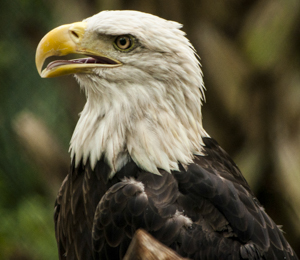
One reason people "flock" to the Sunshine State is the 500 plus species of birds that also make Florida home, some as year-round residents, other birds over-winter here or use the state as a migratory "rest stop".
The Great Florida Birding and Wildlife Trail (GFBWT) is a world class, self-guided birding tour that covers 2000+ highway miles with over 515 viewing stops.
Florida Birds - Herons, Egrets, Eagles and more!
Florida offers a wide variety of outdoor activities from coast to coast, surfing, scuba diving, golf, sport fishing, birding and boating to hiking, hunting or camping, there are countless opportunities to explore. Of course, there are those miles of unspoiled beaches - the perfect place to just lay back, relax and do nothing!
Florida Official State Symbols
- Animal – Florida Panther
- Bird – Northern Mockingbird
- Marine Mammal – Manatee
- Saltwater Mammal – Bottlenose Dolphin
- Tree – Sabal Palm
- Flower – Orange Blossom
- Wildflower – Coreopsis
- Saltwater Fish – Sailfish
- Freshwater Fish – Largemouth Bass
- Butterfly – Zebra Longwing
- Reptile – American Alligator
Florida State Flag
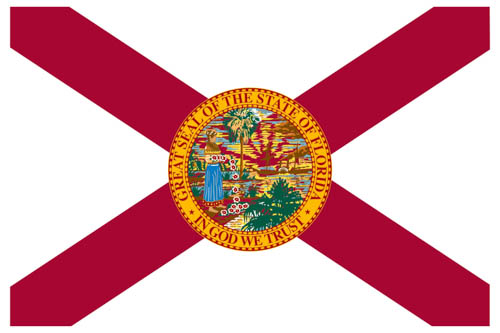
The Florida state flag is a red diagonal cross on a white background with the round state seal in the center. The states seal shows a shoreline with a Seminole woman spreading flowers with a Sabal palmetto behind her, a steamboat sails in the distance as the suns rays break over the horizon. The border of the seal is inscribed with the words "In God We Trust" on the bottom of the seals border and "Great Seal Of The State Of Florida" on the top of the border.
Wildflowers
Florida's original Spanish name was "La Florida" which means flowery feast, so named by explorer Juan Ponce de León in reference to the abundance of flowering plants he found here, as well as the timing of his arrival during the Easter season.
Florida's official wildflower is the native Coreopsis chosen for the variety of bright colors and frequency of growth near roadways. Florida has 12 native species of coreopsis.
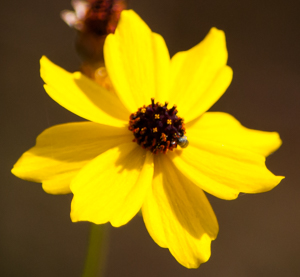
Above - Fringeleaf Tickseed - Coreopsis integrifolia
Florida has over 4,000 species of flowering plants, of these 170 plus are endemic and found nowhere else. The Wildflowers section is divided by flower color and has common wild native and introduced flowering plants. Most of these listings include picture of the leaves, fruit and or flowers to aid in identification. Flowers of the same color can be almost identical in form and the overall growth form of the plant, leaf shape, leaf arrangement on the stem and the type of habitat where it is found are among a plants characteristics needed for an accurate identification.
Trees and Shrubs
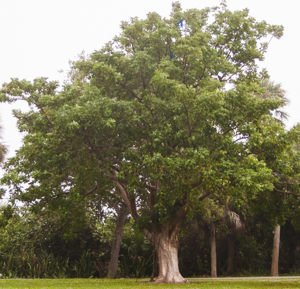
Tree - usually with a single stem or "trunk"
Trees, Shrubs or Herbs, its a jungle out there! In botany a tree is described as "a single stemmed woody plant with a distinct canopy or crown and a height of 15 feet or more at maturity". Trees may occasionally have double or multiple trunks.
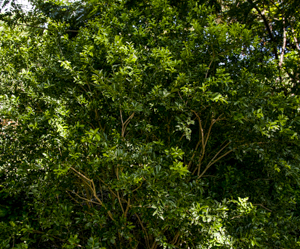
Above - A shrub with multiple woody stems.
Shrubs are also woody stemmed, usually with multiple stems or trunks that rarely exceed 13 - 15 feet. In many cases a plant may grow either as a small tree or large shrub, Southern wax myrtle (Morella cerifera), is one example. Smaller yet, sub-shrubs also grow with multiple stems, however only the base of the stems are woody, the top growth of the plant is herbaceous and often dies back annually.
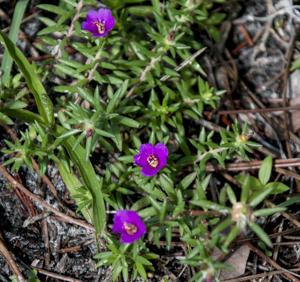
Herbaceous Plants
Graminoids, ferns and forbs are herbaceous plants. Graminoids are the grasses, sedges, and rushes all characterized by a grass-like morphology.
Forbs are herbaceous flowering plants that are not grass-like, these smaller plants have no hard, woody stems, they may be annual, bi-annual or perennial. These can have single or multiple stems and are under 5 feet tall.
Introduced Exotic Plants and Animals
Plants and animals that existed here prior to the first European contact and are naturally occurring in the wild are considered to be the only true natives.
There are more than 67 introduced plants that are considered invasive, these exotics overwhelm and crowd out the native plants causing extensive damage to natural ecosystems. Many of these were introduced to the state as landscape plants and have escaped from cultivation by way of seeds or spores being spread by way of animals, birds and human activity.
Unfortunately there are currently ( as of 2025 ) 64 introduced reptiles that are causing serious environmental and economic harm, perhaps the most well known of these are Burmese pythons that in recent years have decimated native animal populations particularly in the Florida Everglades and throughout Southern Florida.
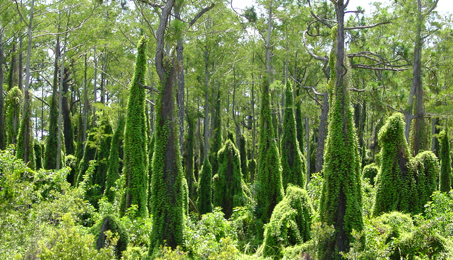
Above - The Old World Climbing Fern (Lygodium microphyllum)grows like a vine up to 90 feet long is a very fast growing exotic fern that has become a major problem in South Florida woodlands. Spores are easily carried and spread by animals, people or vehicles that travel through infested areas.
Dangerous Plants and Animals
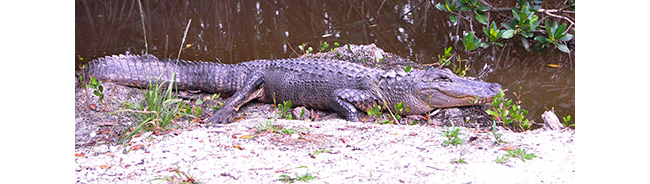
American Alligator
Alligators may be found in or close to any freshwater ponds, marshes, creeks, rivers, canals and ditches. Although they normally avoid humans they become dangerous when people feed them and they begin to associate people with food and lose their natural fear of humans. Alligators apparently don't distinguish between the food being thrown to them from the person throwing it, they also don't know the difference between their natural prey or a dog (leashed or not) or an unwary person close to or in the water.
Florida is certainly a great place to enjoy the "Great Outdoors" and mild winter weather, however because of the states sub-tropical and tropical climate Florida is also home to a few plants and animals that are potentially dangerous, in particular Alligators, there is an old saying among locals in Florida "if you find water - taste it, if it's salty there's sharks in it, if it's fresh there's alligators in it", so consider any body of fresh water of any size to contain Alligators, there are a few different spiders - the Black Widow, Red Widow, Brown Recluse that are capable of delivering a serious bite and four species of Venomous Snakes, the Rattlesnakes, Water moccasin, Copperhead, and the Coral snake.
There are a handful of poisonous plants that should be given a wide berth. Spotted Water Hemlock (Cicuta maculata ) grows throughout Florida and N. America as well is generally accepted as the most toxic plant in North America, the Florida Poisonwood trees ( Metopium toxiferum ) a member of the Sumac family can cause burns and blisters upon contact with human skin.